


There's a feeling of anticipation. Visible is the cold breath exhaled by my competitors as they execute the "about to run" shuffle on the start line.
A rapid flick of the hips.
I'm at my local Saturday morning race and I'm focused. The countdown begins...
Oh, hang on. I must sort my tracker. So does the runner beside me.
The person in the line expresses impatience. I'm not moving until… yes! GPS ready, away I go.
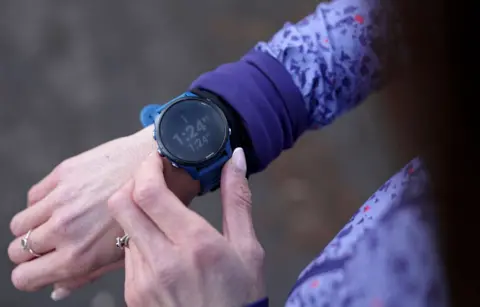
Amidst the crowd, it's hard to see a person without a smartwatch on it. And this extends beyond us athletes who rely on them.
It's a thriving, massive sector. Companies like Garmin are prevalent, featuring an broad array of various devices to suit a range of needs. According to how advanced the model you select, costs can range from a hundred pounds to a significant investment.
"It makes me crazy, I'm unable to stop checking."
"It comforts me… It acts as a supporter supporting me."
"Stop telling me I've had a bad night's sleep."
A handful of the reactions people have shared from fellow device users when I question what they their opinion is on theirs.
The Data Dilemma
My thoughts on my own device? Currently, irritating. It's reporting I'm not hitting my target, causing me to question whether the overhead branches I'm passing under are disrupting my location tracking.
Countless individuals of us strap these compact monitors onto our arms and use them 24/7, ostensibly comfortable with the fact they're constantly recording us.
Gone are the days when we depended on them only to give us an rough count of our daily steps. Currently, they can measure our nightly rest, heart rate, heart rate variability (HRV), our VO2 max.
It's difficult to find a bodily function they don't track.
But are they able to do what they say they do? And are the numbers we analyse a accurate representation of reality? Do they boost our overall health, or do the multitude of readings and constant notifications just increase our sense of overwhelm?

A Complicated Bond
"I do get a bit preoccupied with mine," one user reveals.
While she values how her device monitors her workouts, she finds some of its other features "overwhelming" at times - a feeling that became apparent during a major life event.
Prior to discovering she could adjust the settings, her smartwatch repeatedly informed her she was failing to be active enough. Later on, the watch frequently reports her she's had a poor sleep score.
"I am caring for a young baby, there's no point to be told my sleep was poor," she says. "That fact is only too well."
Couldn't she just take it off?
"I could, I suppose, but I have this push-pull dynamic with it," she continues. "I appreciate it for its fitness insights, I sometimes question whether all the other things it can now do is maybe overkill for me."
Inside the Device
Every device of smartwatch has its own novel way of measuring your bodily functions and processing your data, but the vast bulk use optical sensors on the back of the watch.
They commonly shine minute LED lights onto your wrist which can observe pulsation, identifying your pulse rate. More advanced devices detect changes in the skin conductance that flows through the skin to gauge your nervous system activity.
The Professional Viewpoint
A professor says that in general for smartwatches, it's a "difficult line" - while the ever-evolving tech could actually save lives, "detecting disease before we show symptoms", it could also turn us watch wearers into the "worried well".
He points out that newer wearables can perform tests like electrocardiograms (ECGs), which constantly monitor how normal the heart is. They can flag if someone is experiencing a heart arrhythmia, where there is erratic electrical activity in the heart causing an arrhythmia.
This does not mean someone is about to have a cardiac event, but it can give an early warning they might be more at risk of a heart problem in the future.
But how to make sense of these figures is not straightforward. The expert fears that as additional features are introduced, people may struggle to fully comprehend their data.
"I remain sceptical that the ability to monitor so many things is such a positive development," he says.
A professor focusing on cardiology agrees. Her work into the impact of wearable tech on a set of individuals with health issues suggested a significant portion of those who were given devices to monitor their cardiac function experienced greater stress and were "far more likely to use doctor's time".
She identified a vicious circle with her patients - they saw a concerning reading on their watch. They became worried. Their pulse rose. They got more worried. They looked a second time, and their heart rate went up again.
"When people are presented with stats about ourselves that we can't properly interpret then, of course, we are going to seek clarification," the psychologist says. "We check, we check again - it becomes a vicious cycle."


